Cardiovascular Risk Management and Training Modification for the Masters Athlete (50+) with Treated Atrial Fibrillation: An Expert Report

Executive Summary: The Necessity of Training Modification
The management of Atrial Fibrillation (Afib) in the Masters athlete (defined generally as age 35 and above, and specifically in this context as 50+) presents a critical challenge that necessitates a nuanced shift in training philosophy. While chronic endurance training offers broad cardiovascular benefits, it is fundamentally a dose-dependent risk factor for atrial arrhythmias. For an athlete who has undergone treatment (ablation or pharmacological therapy) for Afib, continuing intense, high-volume training carries a substantial probability of arrhythmia recurrence and disease progression.
Q&A: Are Everyday Microplastics Fueling Heart Disease?

New research from the University of California, Riverside suggests microplastics may directly accelerate heart disease — especially in males.
Here’s what the study uncovered, explained as simple Q&A.
Q: What exactly are microplastics?
A: Microplastics are tiny plastic particles released from:
Food packaging
Clothing and textiles
Household plastics
Industrial waste
How Does Age Affect Atherosclerosis? A Q&A Explainer

Does the risk of atherosclerosis increase as we age? Yes. Atherosclerosis is considered a disease of aging. The likelihood and severity of plaque buildup in the arteries increase with age, even when other risk factors such as smoking, high cholesterol, or hypertension are controlled.
Reversal of Coronary Atherosclerosis: Mechanistic Insights from Human and Primate Studies

Coronary atherosclerosis can regress under defined conditions. Serial intravascular ultrasound (IVUS) and coronary computed tomography angiography (CCTA) studies show that intensive low-density lipoprotein cholesterol (LDL-C) reduction via high-intensity statins, PCSK9 inhibitors, and, in selected settings, icosapent ethyl, can shrink plaque volume. Paradoxically, the arterial lumen often remains unchanged or may even narrow due to reverse or constrictive remodeling. Complementary lifestyle trials such as the Ornish study demonstrated angiographic regression driven primarily by improved endothelial and vasomotor function.
Peter Megdal featured in Dedham Times
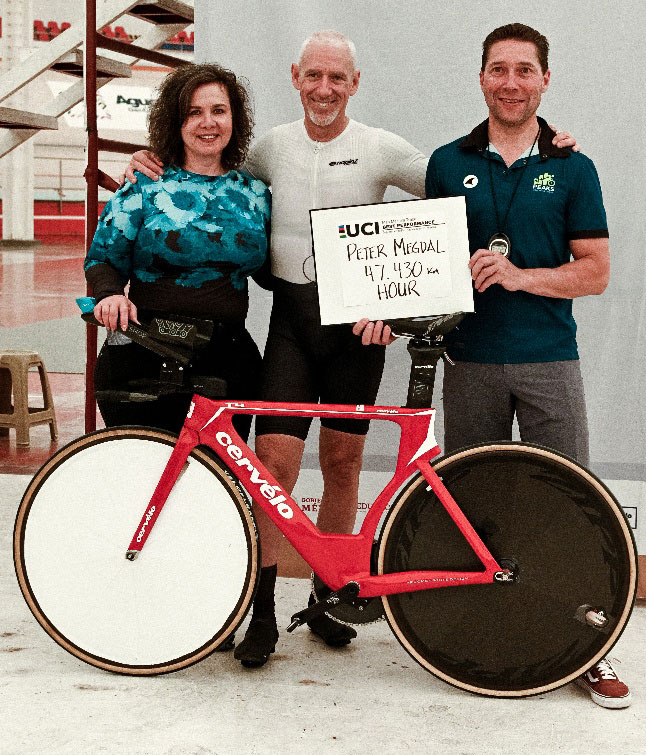
Peter Megdal sets cycling world record
Survivor of heart disease excels in shattering limits others may set for him.
[Editor’s note: The following article concludes coverage in The Dedham Times of the world record Peter Megdal of Dedham holds in men’s cycling. He set the new mark for ages 60-64 of 47.43 kilometers (29.47 miles) traversed in one hour on Sept. 12 at the Bicentario Velodromo in Aguascalientes, Mexico.